It’s dry in the Great Plains.
In April 2024, Edwards County in southwestern Kansas received a scant .02 inches of rainfall. The amount tied 1909 for the lowest April total since records began being kept in 1873.
Put in perspective, most of Kansas received more rainfall during the Dust Bowl years than they have received in the past 3 years.
Rivers, lakes, and creeks are drying up quickly. Water tables are down by as much as 20 feet. The Ogallala Aquifer, the largest reservoir of underground water in the world, is depleting rapidly, endangering the drinking water of 6 million people and the agricultural output of the world-leading United States.
Water is life. Water in the plains is generally scarce but always just enough to support life.
The Dust Bowl May have led to the Great Depression because the U.S. economy was much more reliant on agriculture than it is today. The period is remembered for its drought, unrelenting winds, and giant dust clouds as precious topsoil from Texas was blown north throughout the Great Plains, often into Canada.
During those difficult years of ecological catastrophe, the area received nearly normal amounts of rainfall. The difference was that the rains came hard and fast, flash floods interspersed with long periods of wind and baking heat.
The Great Plains are seeing much of the same weather pattern behavior, except that rainfall totals are down and winters are much more mild, bringing less moisture and more wind.
The impact has been swift. In 2019, record floods left some 80% of South Central Kansas underwater for nearly 4 months. These rains came after a 3-year drought period which aided rapidly-moving wildfires. Two huge fires, one that crossed from Oklahoma and burned through two counties in South Central Kanasas known as the Bourbon County Fire, and one that burned hundreds of thousands of acres, burned 11 residences, and resulted in the evacuation of the northern portion of regional city Hutchinson, had firefighters from all over Kansas and surrounding states racing to stop the burning.
In 2022, another wildfire struck east of Hutchinson, killing one person and destroying 35 residences and over 100 outbuildings. The fire sparked from a controlled burn, the brush pile continuing to smolder for over two weeks with live embers.
Rivers and creeks are dry and unable to feed lakes. Cheney Reservoir supplies much of the water for Wichita, the largest city in Kansas. The metropolitan area’s population hovers around 500,000, and the city is currently considering banning lawn watering.
Water is life. And, right now, the Great Plains need rain, badly.
To see a comparison of how quickly Kansas went from decent precipitation to drought, check out these comparison maps from the U.S. Drought Mitigation Center at the University of Nebraska — Lincoln. Pay attention to the changes from March through April.
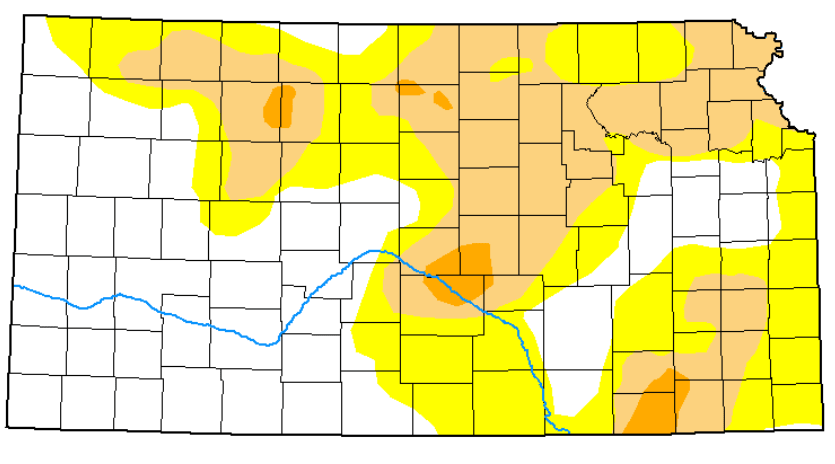
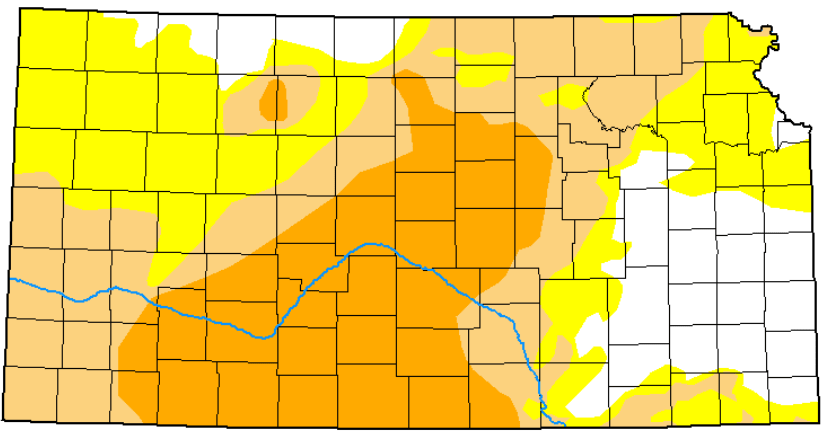
The left photo is marks dry conditions, with the light brown and orange marking drought severity. The graphic on the right shows how much more widespread and severe the drought is on April 30.
It’s frightening, isn’t it?
 Howling Yeti